TL;DR
Six of xAI’s 12 co-founders have left. Elon Musk just pivoted from Mars to the moon mid-IPO. This isn’t just tech drama — it’s a masterclass in what happens when strategy lives inside people’s heads instead of inside systems. AI-powered knowledge capture, automated workflows, and decision-support systems can reduce your “key person” risk by 60-80%. Here’s how to build a business that survives its founders walking out the door.
Here’s a fun thought experiment: What happens to a $1.5 trillion company when half its founding brain trust walks out the door while the CEO announces he’s aiming at a different celestial body?
We don’t have to imagine it. We’re watching it happen in real time.
On Monday night, xAI co-founder Tony Wu announced his departure. Less than 24 hours later, co-founder Jimmy Ba — who reported directly to Elon Musk — said he was leaving too. That brings the tally to six of xAI’s 12 founding members gone. Meanwhile, Musk gathered the remaining employees to explain that xAI needs… a factory on the moon. With a catapult. To fling AI satellites into space.
I’m not making this up. TechCrunch has the full story.
Now, before the Musk defenders and detractors start their usual dance — this isn’t about whether Elon is a genius or a lunatic (pun very much intended). This is about something far more relevant to your business: what happens when critical knowledge, vision, and capability are concentrated in people instead of systems.
Because if it can happen to a company worth more than the GDP of most countries, it can absolutely happen to yours.
SpaceX/xAI's leadership exodus reveals the #1 risk in any tech company: founder dependency. The fix isn't finding better founders — it's building AI systems that capture institutional knowledge, automate decision processes, and make your business resilient regardless of who's in the building. Companies that systematize with AI reduce key-person risk by 60-80%.
The Founder Dependency Trap (And Why AI Companies Fall Into It Hardest)
Here’s the uncomfortable truth about AI startups — and, frankly, most tech companies: the more brilliant your founders, the more dangerous your dependency on them.
xAI launched in July 2023 with a dream team of 12 co-founders poached from DeepMind, Google Brain, Microsoft Research, and OpenAI. These weren’t just managers. They were the people who knew things — proprietary approaches to training, architectural decisions that shaped Grok, and the institutional memory of what was tried, what failed, and why.
When one of them leaves, they take a chunk of that knowledge with them. When six leave? You’re hemorrhaging intellectual capital.
This is the founder dependency trap: The very brilliance that builds a company becomes a single point of failure.
And it’s not unique to trillion-dollar rockets-and-AI empires. I’ve seen this pattern destroy companies at every scale:
- The solo founder whose entire sales process lives in their head
- The CTO who’s the only person who understands the architecture
- The marketing lead whose “instinct” for campaigns can’t be replicated
- The AI engineer who fine-tuned the models and never documented the process
Sound familiar?
What Musk’s Moon Pivot Actually Reveals
Let’s zoom out from the departures for a moment and look at the pivot itself.
SpaceX spent 24 years laser-focused on Mars. Then, days before the Super Bowl, Musk casually posted that they’d “shifted focus to building a self-growing city on the Moon.” His reasoning? Mars would take 20+ years. The moon could be done in half the time.
From a strategic standpoint, this tells us three things:
1. Vision without systems is just vibes. When strategic direction can change with a single tweet, it means the strategy wasn’t embedded in organizational systems — it lived in one person’s conviction. The moment that person’s conviction shifted, so did the entire company’s trajectory.
2. IPO pressure creates pivots. With a $1.5 trillion valuation on the line, investors want something tangible. “Data centers in orbit” is a much easier sell than “Mars colony in 20 years.” When your strategy depends on founder charisma rather than systematic planning, market pressure can derail even the most ambitious vision.
3. The co-founders leaving aren’t random. When half your founding team departs during a strategic pivot, it suggests the new direction wasn’t built through consensus or institutional process — it was declared from the top. That’s a governance problem disguised as a personnel issue.
The AI Solution: Building Companies That Survive Their Founders
Here’s where this becomes actionable for you.
The same AI technologies that Musk is trying to build on the moon can — right now, today — solve the exact vulnerability his companies are demonstrating. The irony is thick enough to cut with a SpaceX rocket.
1. AI Knowledge Capture: Stop Losing What People Know
The single biggest risk when a key person leaves isn’t losing their labor — it’s losing their knowledge. The undocumented decisions. The context behind the architecture. The “we tried that in 2023 and here’s why it failed” tribal knowledge.
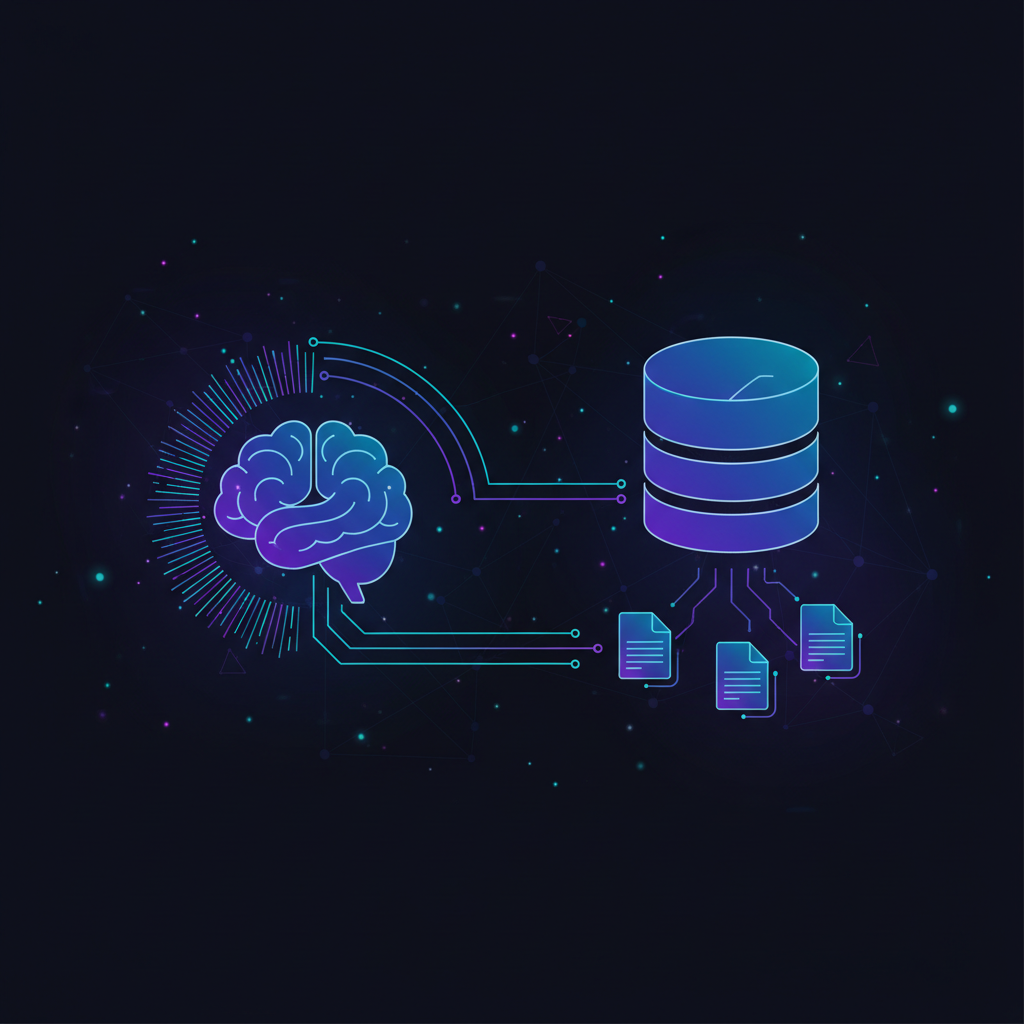
The fix: Deploy AI-powered knowledge management systems that continuously capture, organize, and make searchable the institutional knowledge that currently lives in people’s heads.
Tools like AI agents for workflow automation can document processes as they happen. Meeting transcription AI captures decisions in real time. RAG systems make that knowledge queryable by anyone on the team.
Real example: A 50-person SaaS company I follow implemented an AI knowledge capture system in 2025. When their VP of Engineering left six months later, the transition took two weeks instead of the expected three months. The AI system had captured 80% of his undocumented decision rationale.
2. Automated Decision Frameworks: Remove the Bottleneck
If your company’s strategic decisions require one person’s “gut feel,” you don’t have a strategy — you have a dependency.
AI decision-support systems can:
- Analyze historical decisions and extract patterns
- Flag when current proposals deviate from established strategy
- Provide data-driven recommendations that reduce reliance on individual intuition
- Create audit trails so anyone can understand why a decision was made
This doesn’t mean replacing human judgment. It means augmenting and documenting it so the business doesn’t collapse when the judgment-holder walks out.
3. Workflow Automation: Make Processes Person-Independent
Every process that requires a specific person to execute is a liability. AI-powered automation can systematize the repeatable parts of even complex workflows.
The goal isn’t to automate everything — it’s to automate enough that no single departure creates a crisis. When your sales pipeline, content creation, customer support, and deployment processes are AI-assisted, losing any one team member is a setback, not a catastrophe.
4. AI-Powered Succession Planning
Traditional succession planning asks: “Who replaces this person?” AI-enabled succession planning asks: “What systems need to exist so this role’s knowledge persists regardless of who fills it?”
That’s a fundamentally different — and far more resilient — approach.
Founder-Driven vs. Systems-Driven Companies
- Speed: Visionary founders make fast, decisive calls
- Alignment: Single source of truth for company direction
- Inspiration: Charismatic leaders attract top talent
- Agility: Can pivot quickly when founder sees opportunity
- Fragility: Everything breaks when founder leaves
- Bottleneck: Decisions stall when founder is unavailable
- Knowledge loss: Tribal knowledge walks out the door
- Scaling limits: Can't grow beyond founder's bandwidth
- Governance risk: No checks on strategic whiplash (see: Mars → Moon)
Your 5-Step “Founder-Proof” AI Framework
Enough theory. Here’s what to actually do:
Step 1: Audit your key-person dependencies. List every process, decision, and knowledge domain that relies on a specific individual. Be honest — the list is probably longer than you think.
Step 2: Deploy AI knowledge capture immediately. Start with meeting transcription and automated documentation. Tools like Notion AI, Grain, or Fireflies.ai cost under $30/month and start capturing institutional knowledge from day one.
Step 3: Automate your top 3 bottleneck workflows. Identify the three processes most dependent on specific people and build AI-assisted alternatives. Our guide to automation platforms breaks down the best options.
Step 4: Build decision audit trails. Every significant decision should be documented with context, alternatives considered, and rationale. AI summarization makes this nearly effortless.
Step 5: Test your resilience. Run a thought experiment: if your most critical team member left tomorrow, what breaks? Fix those things before it happens.
The Bigger Picture: Systems Beat Heroes Every Time
Elon Musk is arguably the most visionary founder alive. His companies have done things that seemed impossible. And yet — or perhaps because of this — his companies are exhibiting the exact vulnerability that vision-dependent organizations always face.
SpaceX will probably be fine. It has $1.5 trillion worth of reasons to figure it out. But your business might not have that luxury.
The lesson from xAI’s leadership exodus isn’t “don’t hire brilliant people.” It’s “don’t let brilliance become a single point of failure.”
AI gives us the tools to capture knowledge, automate decisions, and build resilient systems for the first time in business history. The irony that an AI company is demonstrating why you need those tools? That’s just the universe being poetic.
The Verdict
SpaceX’s leadership crisis is your wake-up call. If half of xAI’s founding team leaving doesn’t convince you to systematize your business with AI, nothing will.
The playbook is simple:
- Capture knowledge before it walks out the door
- Automate workflows so no single person is a bottleneck
- Build decision systems that persist beyond any individual
- Test your resilience regularly
The companies that thrive in 2026 and beyond won’t be the ones with the most brilliant founders. They’ll be the ones that turned founder brilliance into organizational capability.
Don’t build a company that needs a hero. Build one that makes heroes optional.
This article is part of our AI Strategy series. For hands-on implementation, check out our guides to AI agents for automated workflows and enterprise AI strategy.