TL;DR
Czech siblings Kateřina Mrázková and Daniel Mrázek just became the first Olympic athletes to perform to AI-generated music at the 2026 Milano Cortina Winter Olympics. Their rhythm dance featured an AI-created track “in the style of Bon Jovi” alongside AC/DC’s “Thunderstruck.” It’s controversial, messy, and legally questionable — but it’s also a signal that AI creativity has graduated from novelty to world stage. Here’s what happened, why it matters, and what tools you can use today.
Skip to the significance breakdown →
The Olympics Just Legitimized AI Music (Sort Of)
Monday night in Milano Cortina, something happened that will end up in AI history books — even if most viewers missed it entirely.
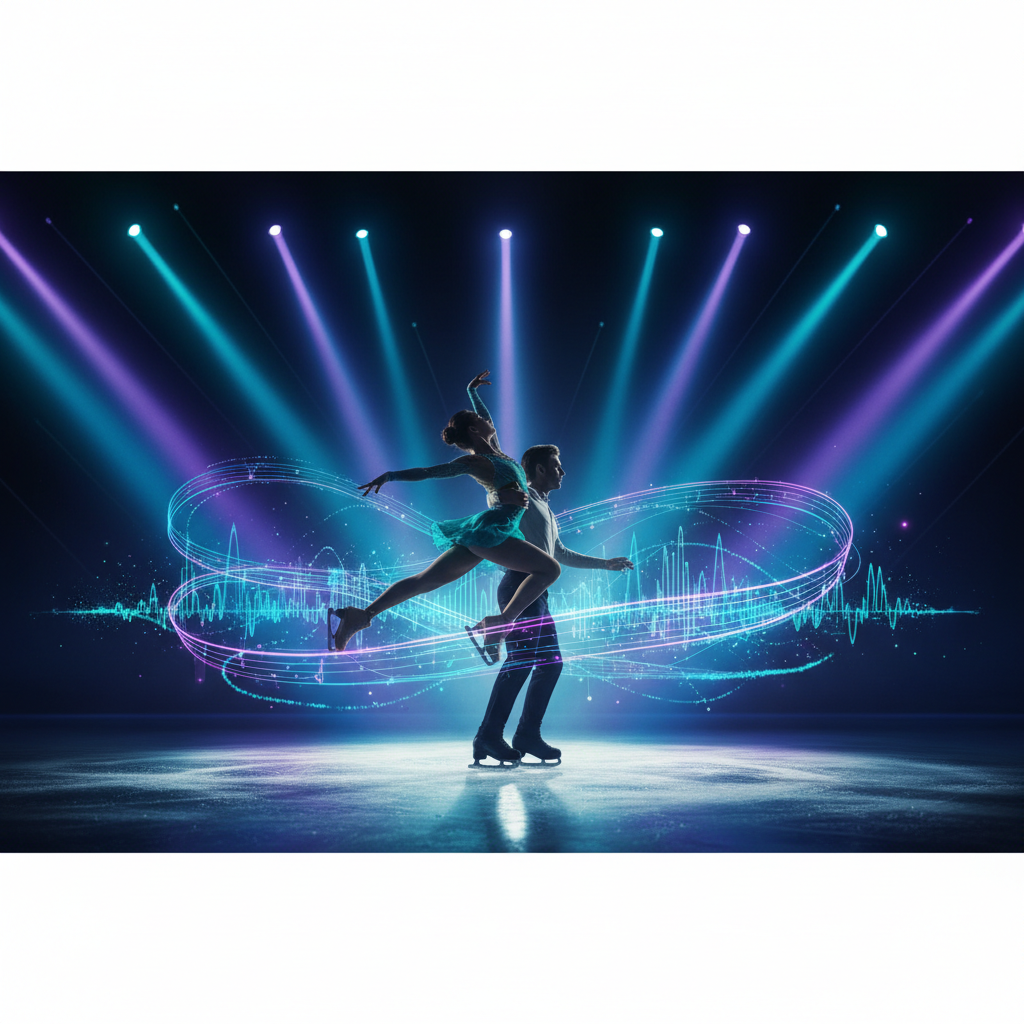
As Czech ice dancing siblings Kateřina Mrázková and Daniel Mrázek spun through their rhythm dance routine — a gravity-defying display of cartwheel lifts and synchronized precision — an NBC commentator casually dropped a bombshell: “This is AI generated, this first part.”
Just like that. No fanfare. No controversy panel. Just a matter-of-fact observation that Olympic athletes were skating to music that no human composed, performed, or sang.
And honestly? That casual delivery might be the most telling part of the entire story.
What Actually Happened
Let’s break this down, because the details are wilder than the headlines suggest.
This season’s ice dance rhythm dance theme is “The Music, Dance Styles, and Feeling of the 1990s.” Other duos went with Spice Girls tributes and Lenny Kravitz medleys. The Czech siblings chose… an AI-generated track titled “One Two” described as “AI (of 90s style Bon Jovi)” paired with AC/DC’s “Thunderstruck.”
Here’s where it gets messy.
The Copyright Problem Nobody Solved
The duo’s AI music journey has been a case study in everything that can go wrong with AI-generated content. Earlier this season, their AI track contained lyrics lifted almost verbatim from “You Get What You Give” by New Radicals — lines like “Every night we smash a Mercedes-Benz” and “Wake up, kids / We got the dreamer’s disease.”
That’s not “inspired by.” That’s a language model doing exactly what language models do: producing the most statistically probable output based on training data. When you ask for ”90s rock,” you get actual 90s rock lyrics regurgitated with a fresh coat of AI paint.
After backlash, they swapped the lyrics — but the replacement track sounds suspiciously like Bon Jovi, with lines like “raise your hands, set the night on fire” echoing Bon Jovi’s actual song “Raise Your Hands.” The AI “vocalist” even sounds like Jon Bon Jovi.
Oh, and “Raise Your Hands” isn’t even from the 90s. So much for theme compliance.
No Rules Were Broken
Here’s the kicker: the International Skating Union has no rules against AI-generated music. The duo’s program was accepted, scored, and treated like any other. The ISU’s official records list the music as “One Two by AI (of 90s style Bon Jovi)” without any asterisk or disclaimer.
The Olympics — the most regulated sporting event on Earth — just shrugged at AI music. Let that sink in.
Why This Matters More Than You Think
This isn’t about one ice dance routine. It’s a legitimacy milestone for AI creativity tools — the kind of event that shifts Overton windows.
1. The Legitimacy Leap
AI music has been stuck in a credibility gap. Sure, Suno and Udio can generate impressive tracks, but they’ve been dismissed as “toys” or “demos.” When AI music plays at the Olympic Games — broadcast to billions — that narrative dies.
This is the AI music equivalent of the first email sent by a Fortune 500 CEO. Not because the technology wasn’t ready before, but because adoption at the highest level signals permission for everyone else.
2. The Regulation Vacuum Is Real
The ISU didn’t ban AI music. The IOC didn’t intervene. No copyright holder filed an injunction (yet). This reveals a massive gap in how institutions handle AI-generated content. If the Olympics can’t or won’t regulate it, who will?
For businesses, this is both opportunity and warning. The window for AI-generated content in professional contexts is wide open — but the copyright risks are real and unresolved.
3. Quality Is “Good Enough”
Let’s be honest: the AI-generated portion of the Czech routine wasn’t groundbreaking music. It was serviceable. It sounded like 90s rock. It was… fine.
And “fine” is exactly the threshold that matters. AI music doesn’t need to win Grammys — it needs to be good enough for the use case. Background music for videos? Check. Podcast intros? Check. Olympic ice dance routines? Apparently, check.
The Technology Behind It
While the Czech team hasn’t disclosed which specific tools they used, the landscape of AI music generation in 2026 gives us strong clues.
The Leading Tools
Suno remains the most accessible option. Its v4.5 produces complete songs — vocals, instrumentation, arrangement — from text prompts. Want ”90s style Bon Jovi rock anthem”? Suno will give you exactly that, including lyrics that may or may not be… derivative.
Udio appeals to users who want more control over the output. Its audio fidelity is arguably superior, and it excels at instrumental pieces — which would be ideal for skating routines.
AIVA specializes in cinematic and classical compositions, while Mubert focuses on loops and ambient music. For a more detailed comparison, check our complete guide to the best AI music generators in 2026.
How It Likely Worked
Based on the output — a rock track with vocals “in the style of” a specific artist — the team most likely used a general-purpose AI music generator with a prompt like:
”90s style rock anthem, male vocals similar to Bon Jovi, energetic, arena rock feel, suitable for ice skating choreography”
The model then synthesized melody, lyrics, instrumentation, and vocals from its training data. The problem? That training data includes actual Bon Jovi songs, which is why the output sounds like — and sometimes literally quotes — Bon Jovi.
This is the fundamental tension in AI-generated creative content right now. The models are only as original as their training data allows, and the more specific your prompt, the more likely you are to get output that’s uncomfortably close to existing work.
Business Implications: What This Means for You
Here’s where this stops being a sports story and becomes a business strategy conversation.
AI Creativity Is Production-Ready
If AI-generated music is good enough for the Olympics, it’s good enough for your:
- Marketing videos — Background music without licensing headaches (mostly)
- Podcasts — Custom intros, transitions, and outros in minutes
- Product demos — Atmospheric tracks that match your brand
- Social media content — Original audio for Reels, TikToks, and Shorts
- Internal presentations — Because stock music is soul-crushing
The cost difference is staggering. A custom 30-second jingle from a human composer: $500-$5,000. The same from Suno Pro: $10/month for unlimited generations.
The Copyright Caveat
Don’t skip this part. The Czech ice dancers’ experience is a cautionary tale. Their AI music plagiarized existing songs — twice. If you’re using AI-generated music commercially, you need to:
- Listen critically for recognizable melodies, lyrics, or vocal styles
- Run output through copyright detection tools (Audible Magic, YouTube’s Content ID)
- Use commercial-licensed tiers of AI music tools (free tiers often have restrictive terms)
- Document your process in case of disputes
The legal landscape is evolving fast. Music publishers have already sued Anthropic for $3 billion over training data, and similar suits target music AI companies directly.
The Smart Play
Use AI music as a starting point, not a final product. Generate ideas, find melodies, prototype arrangements — then refine with human ears and judgment. The Czech team would have been better served by using AI as a composition tool and having a human musician polish the output. They’d have gotten a unique track without the plagiarism concerns.
This hybrid approach is where the real value lives for businesses. AI handles the 80% that’s time-consuming but not creatively demanding. Humans handle the 20% that requires judgment, originality, and legal safety.
Tools You Can Try Today
Ready to experiment? Here’s where to start:
| Tool | Best For | Price | Commercial Use |
|---|---|---|---|
| Suno | Complete songs with vocals | Free / $10-30/mo | Pro tier only |
| Udio | High-fidelity instrumentals | Free / $10-30/mo | Pro tier only |
| AIVA | Cinematic & classical | Free / €11-33/mo | Standard tier+ |
| Mubert | Loops & ambient | Free / $14-39/mo | All paid tiers |
| Soundraw | Customizable tracks | $16.99/mo | All plans |
| ElevenLabs | Voice & audio | Free / $5-99/mo | Paid tiers |
For a deep dive into each tool’s strengths and weaknesses, read our best AI music generators comparison.
The Bigger Picture
The Czech ice dancers didn’t set out to make AI history. They probably just wanted affordable, theme-appropriate music for their routine. But by skating to AI-generated music on the Olympic stage — broadcast globally, recorded permanently — they’ve accelerated a conversation that every creative industry will need to have.
AI-generated content is no longer emerging technology. It’s here. It’s at the Olympics. It’s imperfect, legally murky, and sometimes plagiarizes Bon Jovi. But it works, it’s accessible, and it’s only getting better.
The businesses and creators who figure out how to use these tools responsibly — leveraging AI for speed and scale while maintaining human oversight for quality and originality — will have a significant competitive advantage.
The ones who ignore it will find themselves skating to someone else’s music.
Want to stay ahead of AI tool developments? Check out our complete AI tools guide for small businesses for practical recommendations you can implement today.