TL;DR
OpenAI upgraded Deep Research to GPT-5.2 with website-specific search — you can now constrain research to trusted sources instead of the open web. Real-time tracking, app integrations, and reduced hallucinations make it a genuine Perplexity competitor. Use it for synthesis tasks (market research, competitive intelligence), Perplexity for speed, Claude for reasoning. Always verify critical claims — it’s an assistant, not a replacement.
There’s a quiet arms race happening in AI right now, and it’s not about who can write the best poem or generate the prettiest image. It’s about who can research better than you can.
OpenAI just upgraded Deep Research to run on GPT-5.2, and the headline feature — website-specific search — might sound incremental. It’s not. This is OpenAI drawing a line in the sand against Perplexity, Google, and every other tool vying to become your default research brain. Let’s break down what’s actually new, what it means for your workflow, and whether you should care.
What Actually Changed in Deep Research
Deep Research has been around since early 2025, originally powered by a specialized version of the o3 model (with o4-mini support added later in 2025). The concept was always compelling: give ChatGPT a research question, and it autonomously kicks off multi-stage web searches, synthesizes findings, and delivers a structured report. Think of it as a junior research analyst who never sleeps and never complains about overtime.
Here’s what the GPT-5.2 upgrade brings to the table:
Website-Specific Search. This is the big one. You can now tell Deep Research to search specific websites — not just the open web. Need competitive intelligence from a particular industry publication? Want to mine a company’s blog for product updates? You can now constrain your research to exactly the sources you trust, rather than hoping the model finds them on its own.
App Integrations. Users can connect apps to ChatGPT, feeding Deep Research additional context beyond what’s publicly available on the web. This bridges the gap between “internet research tool” and “knowledge worker that actually knows your stack.”
Real-Time Progress Tracking. You can now watch the research happen in real time, interrupt it with questions mid-search, or feed it new sources on the fly. No more submitting a query and staring at a spinner for ten minutes wondering if it’s still alive.
Full-Screen Reports. Results can now be displayed as full-screen reports rather than crammed into the chat window. A small UX change, but one that signals OpenAI is thinking about Deep Research as a product, not just a feature.
Reduced Hallucinations. GPT-5.2 has shown significant improvements in reducing hallucinations across the board. For a research tool, this isn’t a nice-to-have — it’s existential. A research assistant that makes things up is worse than no research assistant at all.
The Website-Specific Search Play: Why It’s Smarter Than It Looks
Let’s be honest — when most people hear “website-specific search,” they think: Oh cool, I can Google within a site. My browser already does that.
That misses the point entirely.
The power isn’t in searching one website. It’s in telling an autonomous research agent to synthesize information across specific trusted sources while ignoring the noise. Consider these scenarios:
Competitive Intelligence. “Search TechCrunch, The Information, and Crunchbase for everything about [competitor]‘s funding, hiring, and product launches in the last 6 months.” That’s not a Google search. That’s a research brief that would take a human analyst hours.
Regulatory Research. “Search SEC.gov and the Federal Register for any filings or proposed rules mentioning the fintech sector since January 2026.” Try doing that manually. I’ll wait.
Academic Deep Dives. “Search arXiv, PubMed, and Nature for recent papers on [specific technique] and synthesize the findings.” Researchers, this one’s for you.
Internal Knowledge Mining. Combined with app integrations, you could potentially point Deep Research at your company’s Confluence, Notion, or internal wikis. That turns it from a web research tool into a genuine knowledge management system.
The key insight: website-specific search transforms Deep Research from “search the internet and hope for the best” into “search exactly what I tell you to search.” That’s the difference between a tool and an instrument.
The Competitive Landscape: How GPT-5.2 Deep Research Stacks Up
Here’s where things get interesting. Deep Research doesn’t exist in a vacuum, and OpenAI knows it.
Perplexity: The Speed Demon
Perplexity has been eating OpenAI’s lunch on research queries for a while now. Their Deep Research mode hit 93.9% accuracy on OpenAI’s SimpleQA benchmark at launch in early 2025, has cited up to 50 sources per report at launch (compared to ChatGPT’s typical 20), though citation volume varies by query, and — crucially — completes most tasks in under 3 minutes. ChatGPT’s Deep Research historically takes significantly longer.
Perplexity’s free tier offers a handful of deep research queries per day. Pro users ($20/month) get significantly higher limits, though Perplexity has adjusted quotas several times — check their current pricing page for exact numbers. For pure research speed, Perplexity remains the benchmark.
Where GPT-5.2 fights back: Website-specific search and app integrations give Deep Research a customization edge that Perplexity doesn’t match. You can’t tell Perplexity to only search your trusted sources. You can’t plug it into your app ecosystem. Speed is Perplexity’s moat; specificity is now OpenAI’s.
Google Gemini: The Data Advantage
Google has the ultimate unfair advantage in search — they literally are the search index. Gemini’s research capabilities benefit from Google’s knowledge graph, real-time indexing, and decades of search infrastructure.
Where GPT-5.2 fights back: Google’s research tools are powerful but diffuse. Deep Research’s autonomous multi-stage approach — where the AI decides what to search next based on what it’s already found — creates a more coherent research narrative. Google gives you links. Deep Research gives you synthesis.
Claude (Anthropic): The Reasoning Challenger
Full disclosure: Claude excels at careful, extended reasoning — particularly for complex multi-step analysis. It’s arguably one of the strongest reasoning models on the market right now. Anthropic’s approach to extended thinking and careful analysis produces research-quality outputs, especially for complex multi-step problems.
Where GPT-5.2 fights back: Claude now has native web search (since March 2025), but it lacks the autonomous multi-stage research workflow that makes Deep Research distinctive. Where Deep Research autonomously plans, executes, and iterates across dozens of sources, Claude’s web search is more query-driven. Deep Research is a push-button research report — that end-to-end automation has real value.
The Real Competitive Picture
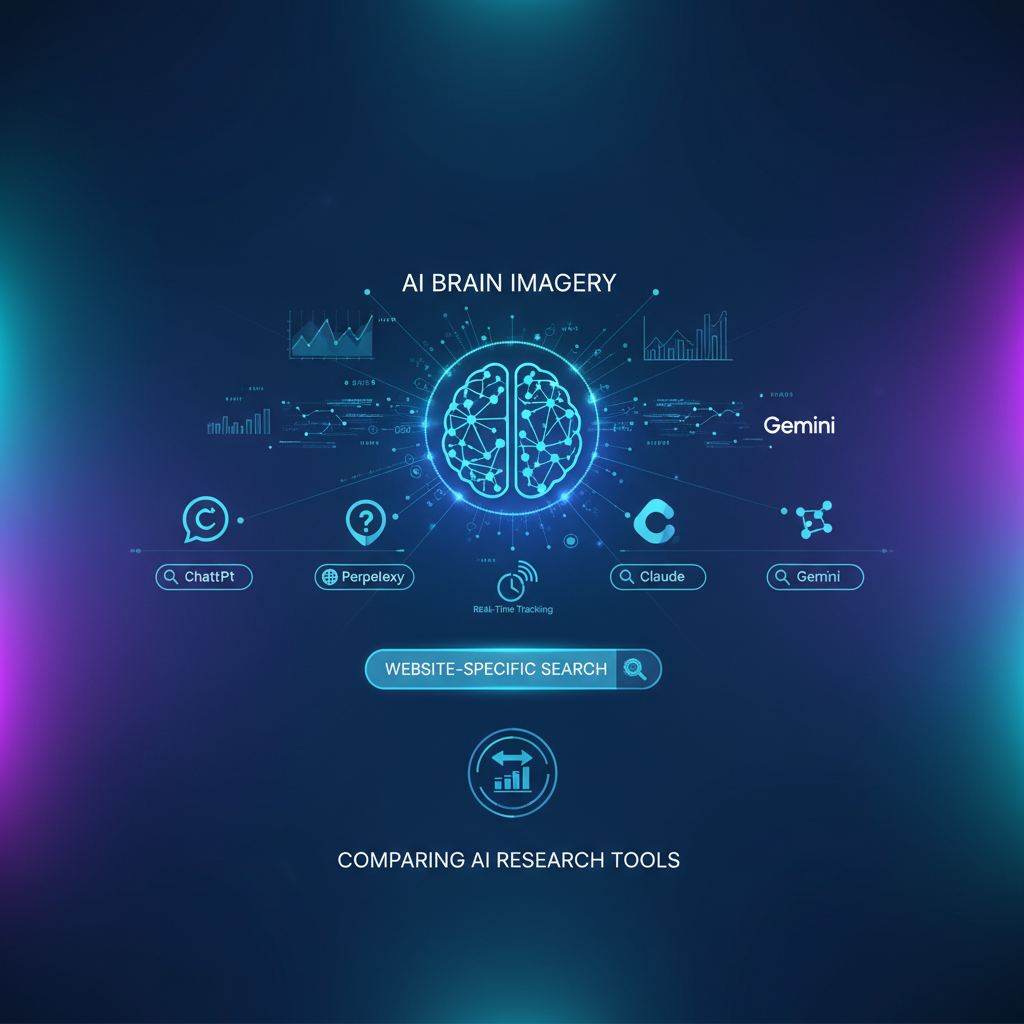
Here’s what nobody tells you: no single tool wins across all research use cases. The landscape in 2026 looks like this:
GPT-5.2 Deep Research wins for deep synthesis and source control, Perplexity for speed, Claude for complex reasoning, and Gemini for real-time Google data. Pick the right tool for the task—no single winner across all use cases.
| Need | Best Tool |
|---|---|
| Fast factual lookups with citations | Perplexity |
| Deep synthesis from specific sources | GPT-5.2 Deep Research |
| Complex reasoning and analysis | Claude |
| Real-time information with Google data | Gemini |
| Academic paper discovery | Semantic Scholar / Elicit |
The smart move isn’t picking one. It’s knowing when to use each.
Practical Use Cases: When GPT-5.2 Deep Research Actually Shines
Let’s get concrete. Here’s when the GPT-5.2 upgrade genuinely changes your workflow:
1. Market Research That Doesn’t Suck
Traditional market research means paying $5,000+ for a report that’s 6 months out of date by the time you read it. Deep Research with website-specific search lets you point the AI at industry publications, competitor blogs, and financial databases to build a current picture in minutes.
Example prompt: “Search Gartner.com, Forrester.com, and McKinsey.com for their latest analyses of the AI SaaS market. Cross-reference with TechCrunch and The Information for recent startup activity. Synthesize into a competitive landscape report.”
2. Due Diligence on Steroids
For investors, M&A teams, or anyone evaluating a company: point Deep Research at SEC filings, Glassdoor, LinkedIn, and industry news to build a comprehensive profile. The real-time tracking means you can steer the research as patterns emerge.
3. Content Research and Fact-Checking
Writers and journalists can use website-specific search to validate claims against primary sources. Instead of the AI pulling from random blogs, you can constrain it to verified publications and official databases.
4. Technical Documentation Deep Dives
Developers can point Deep Research at specific documentation sites, GitHub repos, and Stack Overflow to get synthesized answers about complex technical problems — with sources you can actually verify.
The Elephant in the Room: Hallucinations Haven’t Gone Away
Here’s the reality check that OpenAI would prefer you not dwell on: even with web search, even with GPT-5.2’s improvements, AI-generated research still hallucinates. The Decoder’s reporting makes this clear — “web search significantly reduces hallucination rates overall, but doesn’t eliminate them.”
And here’s the kicker: the longer the generated text, the higher the risk of mistakes. A two-page research report has more surface area for errors than a three-sentence answer. Deep Research generates long outputs by design. See the tension?
This doesn’t mean the tool is useless. It means you should treat Deep Research outputs the way you’d treat a research brief from a new hire — valuable starting point, but verify the critical claims before putting your name on it. The full-screen report format and source citations help here. Use them.
What This Means for the AI Research Tool Market
The GPT-5.2 Deep Research upgrade tells us something important about where OpenAI sees the next battleground. It’s not chatbots. It’s not image generation. It’s autonomous knowledge work.
The progression is clear: ChatGPT started as a conversational AI. Then it got tools (code interpreter, DALL-E, browsing). Then it got Deep Research. Now Deep Research gets precision targeting with website-specific search and app integrations. Each step moves ChatGPT further from “chatbot” and closer to “autonomous work platform.”
OpenAI explicitly considers Deep Research its first “AI agent” inside ChatGPT — a system that independently plans and executes multi-stage tasks. The website-specific search feature isn’t just a convenience. It’s giving that agent better tools. And an agent with better tools is an agent that can replace more human workflow steps.
For Perplexity, this is an existential challenge. Their speed advantage is real, but if OpenAI can match it while offering deeper customization, the value proposition shifts. For Google, it’s a reminder that owning the search index doesn’t automatically win the research war. For everyone else, it’s a signal: the research tool market is heating up fast.
The Bottom Line
GPT-5.2 Deep Research with website-specific search is genuinely useful. Not “change your life overnight” useful, but “save you 3-4 hours per week on research tasks” useful. For knowledge workers, analysts, and anyone who regularly needs to synthesize information from multiple sources, it’s worth trying.
Here’s what I’d actually recommend:
- Use Deep Research for synthesis tasks where you need information from multiple sources woven into a coherent narrative.
- Use Perplexity for quick factual lookups where speed and citation volume matter most.
- Use Claude for complex reasoning where you need the AI to actually think through a problem, not just find information about it. (See our full ChatGPT vs Claude comparison for more details.)
- Always verify critical claims. The AI is a research assistant, not a research replacement.
The real winners in 2026’s AI research landscape won’t be the people using the best tool. They’ll be the people who know which tool to use when.
And that, as Aristotle would say, is practical wisdom. 🦉
What’s your go-to AI research workflow? Have you tested GPT-5.2’s Deep Research yet? Drop your experience in the comments — we’re building a comparison guide and want real-world data points.