Yesterday was a bloodbath for software stocks. Thomson Reuters, RELX (LexisNexis), Wolters Kluwer, Pearson, Sage — all cratering. The London Stock Exchange Group dropped 8.5%. In total? A $285 billion market rout.
The cause wasn’t a recession warning. It wasn’t earnings misses. It was a GitHub repository from Anthropic.
TL;DR — The Quick Take
Anthropic launched plugins for Claude Cowork that turn it from a general-purpose AI assistant into specialized enterprise software — including a legal plugin that does contract review, NDA triage, and compliance tracking. Wall Street panicked because foundation-model companies are no longer just selling APIs. They’re coming for the entire software stack.
What Is Claude Cowork?
Claude Cowork launched on January 12, 2026, as “Claude Code for the rest of your work.” While Claude Code lives in your terminal for developers, Cowork is designed for knowledge workers who don’t code but want the same agentic capabilities.
Give it access to a folder on your computer, and it can:
- Read, edit, and create files
- Plan and execute multi-step workflows
- Operate within security boundaries you define
- Run in a sandboxed virtual machine environment
Think of it as having a competent junior colleague who can actually follow through on complex, multi-step tasks without needing you to babysit every step.
The Plugin Bomb
On January 30, Anthropic dropped the real bomb: 11 open-source plugins on GitHub.
These aren’t simple integrations. Each plugin bundles:
- MCP connectors to external applications (Slack, Box, Jira, Microsoft 365)
- Sub-agents optimized for specific tasks
- Slash commands for quick workflow triggers
- Custom system prompts that define how work gets done
The plugins cover:
- Sales — CRM integration, prospect research, deal prep
- Marketing — Campaign planning, content drafting
- Finance — Financial analysis, forecasting models
- Customer Support — Ticket handling, response templates
- Product Management — Roadmap planning, stakeholder updates
- Biology Research — Research workflows
- And legal…
The Legal Plugin: The Shot Heard Round Wall Street
The legal plugin is what triggered the selloff. Here’s what it does:
/review-contract — Runs clause-by-clause review against your negotiation playbook. Returns green/yellow/red flags and redline suggestions.
/triage-nda — Categorizes incoming NDAs into standard approval, counsel review, or full legal review.
/vendor-check — Checks vendor agreement status.
/brief — Generates contextual briefings: daily updates, topic research, incident response.
/respond — Creates templated responses for data subject requests, discovery holds, and common legal inquiries.
It connects to Box, Egnyte, Jira, Microsoft 365, and Slack — the standard enterprise legal stack.
Why This Terrified Investors
For years, companies like Thomson Reuters, RELX, and Wolters Kluwer have operated on a simple model: “We have the data, the workflows, and the integrations. AI companies provide the models, we provide everything else.”
That assumption just died.
Anthropic isn’t just selling Claude as an API anymore. With Claude 4 Opus at the core, they’re shipping model + wrapper + workflow directly to enterprises. They’re bypassing the legal tech vendors entirely and going straight to customers.
As one industry analyst put it: foundation model companies are moving “from model supplier to application layer and workflow owner.”
The Market Carnage
Here’s what happened on February 3, 2026:
| Company | Drop |
|---|---|
| London Stock Exchange Group | -8.5% |
| RELX (LexisNexis owner) | Significant decline |
| Thomson Reuters | Sharp drop |
| Wolters Kluwer | Major selloff |
| Pearson | Heavy losses |
| Sage | Considerable decline |
Total market cap wiped: $285 billion in a single day.
Whether this is an overreaction is almost beside the point. The market is pricing in a fundamental shift: AI foundation model companies are no longer neutral infrastructure. They’re potential competitors to every enterprise software vendor.
The MCP Connection
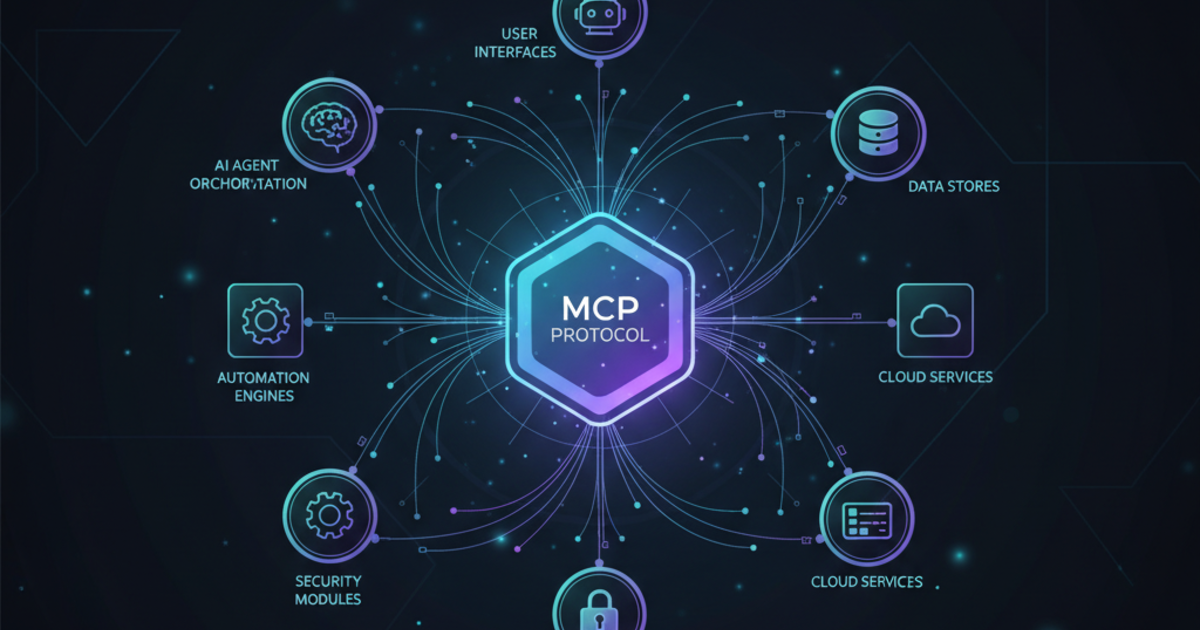
This plugin architecture is powered by Model Context Protocol (MCP), Anthropic’s open standard for connecting AI tools to external systems. We’ve covered MCP in detail here.
MCP is what turns Claude from “good at drafting text” to “good at drafting text within the context of your specific matters, documents, and workflows.”
It’s the bridge between general-purpose AI and domain-specific automation. And by open-sourcing the protocol, Anthropic is positioning itself as the platform that other tools plug into — not the other way around.
What This Means for Enterprise Software
1. The Wrapper Business Is Under Threat
Dozens of legal AI startups have built their businesses on “foundation model + proprietary wrapper + workflow integration.” Harvey, Legora, and others have raised millions betting that they’re the ones who add value on top of Claude or GPT.
Now Anthropic is offering that wrapper themselves. For free. Open-source.
2. Data Moats Are Weakening
RELX (LexisNexis) and Thomson Reuters have historically competed on proprietary legal databases. But if an AI agent can synthesize, summarize, and act on any documents you feed it, how valuable is the exclusive database?
3. This Is Just the Beginning
Legal is one of 11 plugins. Sales, marketing, finance, support, product management — they’re all there. Every enterprise software category that’s been building “AI features” into their products now faces a competitor that is the AI.
The Meta-Plugin: Building Your Own
Anthropic included a plugin for creating plugins. Non-technical users can customize and extend Cowork without touching code.
This is the real moat play. They’re not just shipping pre-built solutions — they’re creating a platform where enterprises build their own AI workflows. That’s stickier than any individual feature.
Meanwhile, At NASA…
In a delightful side note, Anthropic revealed that NASA is using Claude to drive the Perseverance Mars rover.
Researchers used Claude to analyze Mars imagery and generate driving instructions in Rover Markup Language. Last month, Perseverance used Claude’s navigation guidance to traverse a 1,300-foot path through a field of rocks.
Claude cut the time needed to plot obstacle-free courses by half.
Yes, the same AI causing a market meltdown is also helping explore Mars. The future is weird.
Who Should Be Worried?
Very worried:
- Legal tech vendors (Harvey, Legora, Casetext)
- Enterprise workflow tools without AI moats
- Companies whose value prop is “we integrate AI into X”
- Anyone not keeping up with the latest AI agents
Moderately concerned:
- Thomson Reuters, RELX (data still has value, but competitive dynamics are shifting)
- SaaS vendors in any category with a Cowork plugin
Watching carefully:
- OpenAI (are they planning similar moves?) — see our ChatGPT vs Claude comparison
- Microsoft (Copilot needs to keep up)
- Google (Gemini’s enterprise play)
The Bottom Line
Anthropic just demonstrated that foundation model companies can ship complete enterprise solutions, not just APIs. The “AI as infrastructure” era is ending. The “AI as application” era has begun.
For enterprises, this might actually be good news. More competition, better tools, potentially lower costs.
For the software companies that assumed they’d add value on top of AI? Tuesday was a wake-up call.
The AI is coming for your workflows. And it’s bringing plugins.
To understand the technology powering these plugins, see our MCP protocol explained guide. For more on how AI agents work, check our best AI agents guide.
📬 Get weekly AI tool reviews and comparisons delivered to your inbox — subscribe to the AristoAIStack newsletter.
Keep Reading
- Anthropic AI 2026: The Market Selloff Explained
- Best AI Agents 2026
- Best MCP Servers and Tools
- MCP Protocol Explained
- ChatGPT vs Claude: Which Should You Use?
- Claude Opus vs Sonnet: Which Model?
Last updated: February 2026